Refer and Earn App Systems Explained
Every refer and earn app in India promises bonus coins or rupees when you invite friends—yet many users share their link ten times and wonder why
Understanding reward mechanisms in earning apps starts with knowing how advertiser tracking links verify your actions on an Android phone. Unlike fixed employment, zero-investment platforms only issue reward points after a third-party server confirms you met specific activity rules. This category explains how task-based, game-based, and referral systems validate actions and why tracking drops happen.
Every reward platform relies on distinct verification triggers to approve points before you can redeem them:
Task-Based Rewards: Users install partner apps, complete sign-ups, or finish short surveys. Read our guide on how task rewards work in earning apps to see how offerwalls confirm first-time installs.
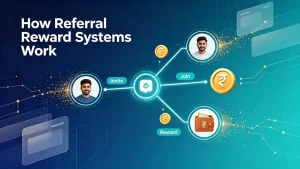
Referral Rewards: Platforms credit points when an invited friend registers using your link and finishes qualifying tasks. Check how referral rewards work to understand multi-step invite conditions.
Game-Based Rewards: Systems track active screen time or level milestones inside partner mobile games via Android Usage Access permissions.
In-App Reward Points: Completed actions generate coins rather than direct rupees. Review how reward points work to check coin-to-rupee conversion math and daily limits.

Every refer and earn app in India promises bonus coins or rupees when you invite friends—yet many users share their link ten times and wonder why
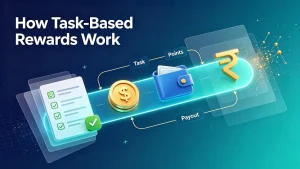
Apps that let you complete task and earn money operate on a straightforward performance-marketing loop: external brands and app studios pay a task earning app whenever
Different platforms focus on specific activity models and access formats on Indian smartphones. The table below maps each mechanism to its technical trigger and our documented platform profiles:
| Reward Mechanism | Primary Verification Trigger | Common Limitation on Android | Documented Platform Reference |
| Task & Offerwall Modules | Google Advertising ID + Postback URL | Private DNS ad blockers or switching Jio/Airtel data mid-task breaks tracking. | Task Joy Research Profile |
| Referral & Invite Programs | Unique Invite Code + Device Fingerprint | Same Wi-Fi IP or duplicate device IDs trigger automatic fraud rejection. | Taurus App Research Profile |
| Game & Playtime Milestones | Android Usage Access Permission | Battery saver modes restrict background time tracking on budget phones. | PlayVerse App |
| Browser Check-Ins & H5 Tasks | Active Browser Cookies + Session ID | Incognito tabs or clearing Chrome cache deletes task attribution. | LootCash H5 |
Even when you follow on-screen instructions, technical conflicts on your phone can block the reward signal:
Private DNS and Ad Blockers: Custom DNS settings (such as dns.adguard.com) block the redirect links that advertisers use to credit your account.
Previous App Installations: Offerwalls only pay for new users. If you installed a partner app months ago on the same Google account, the task will not track.
Aggressive Battery Optimization: Android power-saving modes often kill background tracking services while you play a partner game, causing playtime milestones to stall.
Browser Cache Resets on H5 Portals: When using web-based platforms like LootCash H5, switching browsers between clicking an offer and finishing it breaks cookie attribution.
When you tap an offer, the app opens a tracking link that records your Google Advertising ID before redirecting to the Google Play Store. Once you install and open the partner app, its server sends a confirmation signal back to credit your points.
Most platforms split referral bonuses into stages. Your friend usually has to complete a minimum number of daily tasks or reach a point milestone before the referral reward unlocks.
Game modules typically track minutes played rather than heavy online multiplayer data. However, you must grant Usage Access permission and keep a stable internet connection at the end of your session so the timer syncs.
Yes. Native apps use device-level Advertising IDs, while browser-based H5 platforms rely on active browser cookies. Keeping cookies enabled and avoiding incognito mode is essential for H5 tracking.
No. Task availability fluctuates based on advertiser budgets in India, and reward points vary by campaign. Platforms do not offer fixed salaries or guaranteed daily earnings.